Last Sunday, five people from our class formed a group and went to San Francisco to visit two museums, the Asian Art Museum and the San Francisco Museum of Modern Art. Before I go, I did some research on the museums’ websites.
After reviewing the website of the Asian Art Museum, I knew that sponsored by the Target Department Store, the museum is free on the first Sunday of each month. But there are still some exhibitions that are not free, like Tattoos in Japanese Prints, which require additional tickets. I learned that there are more than 18000 objects online, and we can view the collections we are interested in directly on the official website. There will be information about the collection’s places of origin, materials, dimensions and some other related details on the website. And I also learned that there are more than 2000 artworks on the second and third floors in the collection galleries. The collections come from all the major cultures of Asian, so I planned to visit these exhibitions. The museum also organizes many events that allow families and members to participate, which is really fun. But unfortunately, I don’t have much time to participate in these activities.
Because the Museum of Modern Art is very close to the Asian Art Museum and we are all very interested in it, so we planned to visit here in the afternoon. For this reason, I also checked out the website of this museum. I learned that the tickets for young adults is $19, so I brought my passport with me when l bought tickets. In the website, I saw an article named The 6 San Francisco Museum Exhibitions You Can’t Miss in 2019, and it mentions“Andy Warhol-A to B and Back Again” at SFMOMA, so l planned to go there.
Because the free tickets for the Asian Art Museum are limited and are on a first-come, first-served basis, so we set off early in the morning. We first walked from the residence halls unit 2 to the subway station in downtown Berkeley, then arrived at the museum by subway.
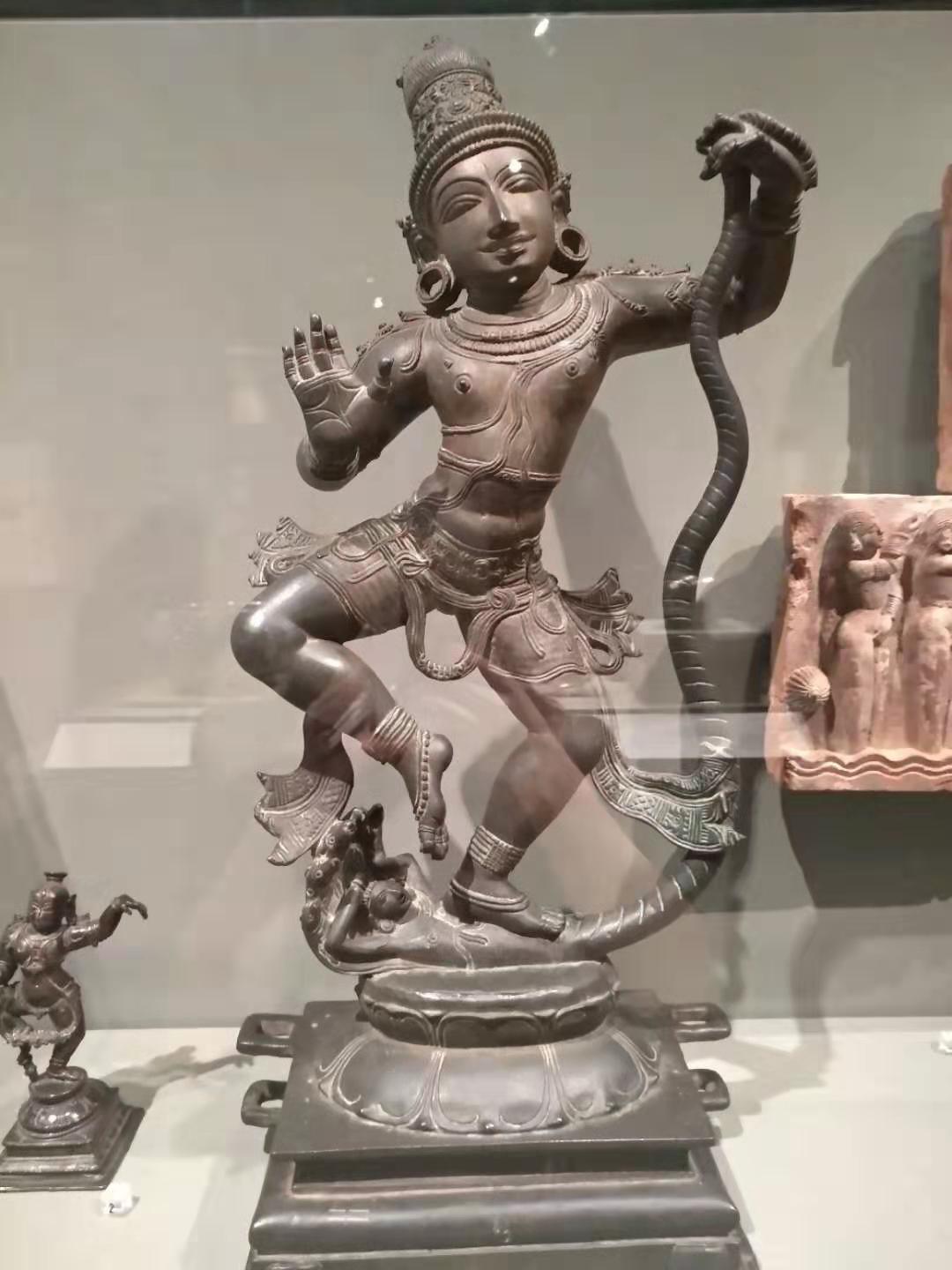
I saw a lot of interesting things at the Asian Art Museum, such as some religion-related sculptures and weapons called kris. What I want to talk about is an Indian sculpture. Its name is Krishna overcoming the serpent Kaliya, which is from about 1400-1500 AD. From this statue, we can see that an Indian god is dancing on a half-human snake, he grabbed the snake’s tail with one hand and stood on the upper part of the snake with one foot. This snake’s hands are folded at the top of the head, showing its awe of God. There are five waves underneath it, which means they are probably in the river. I think this sculpture does reveal in a certain sense the plight of India’s most sacred river the Ganges and its tributary Yamuna River. These rivers are now heavily polluted, but their important religious implications urgently require people to pay attention to its environmental problems and take measures to improve them in time.
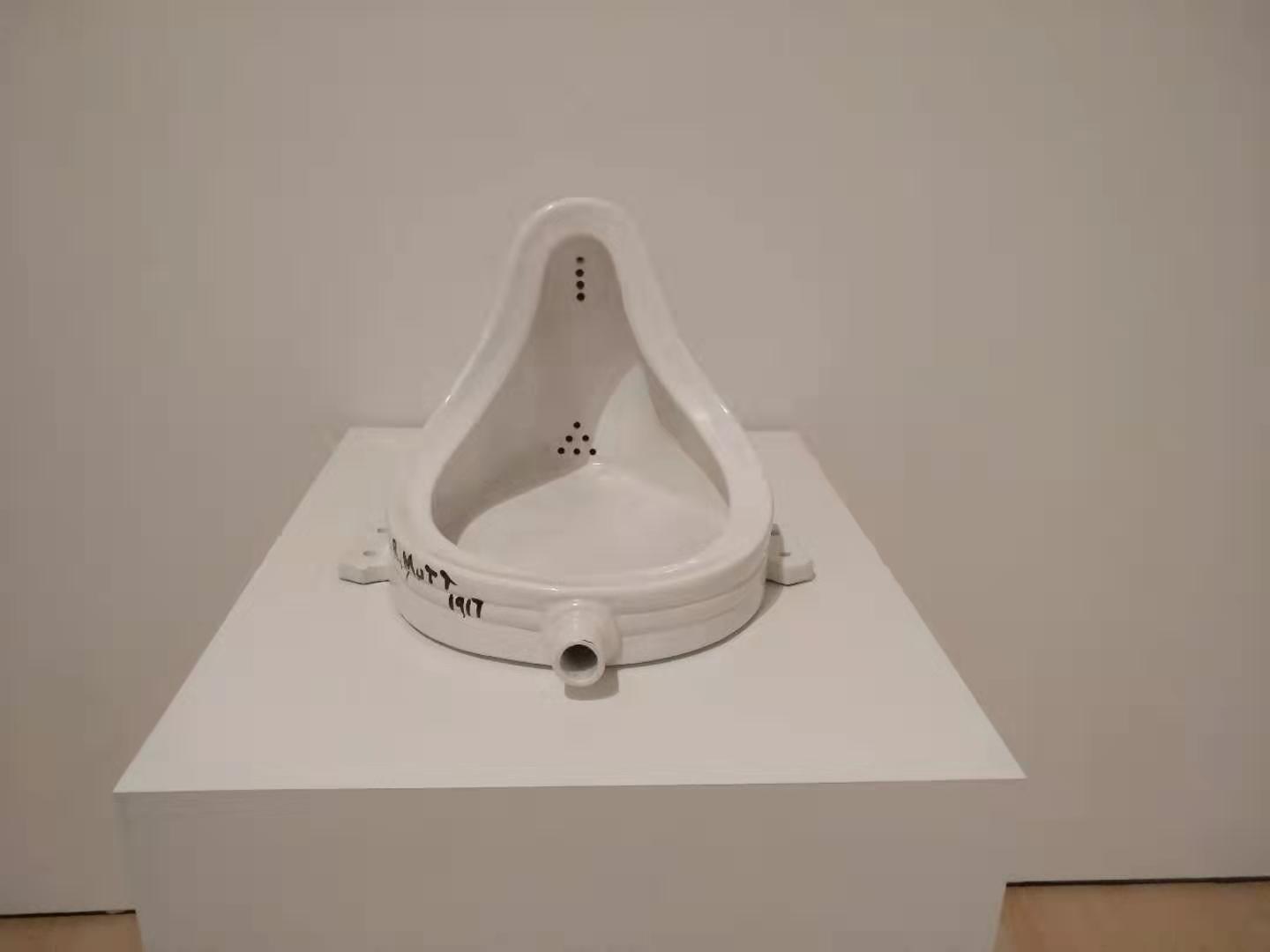
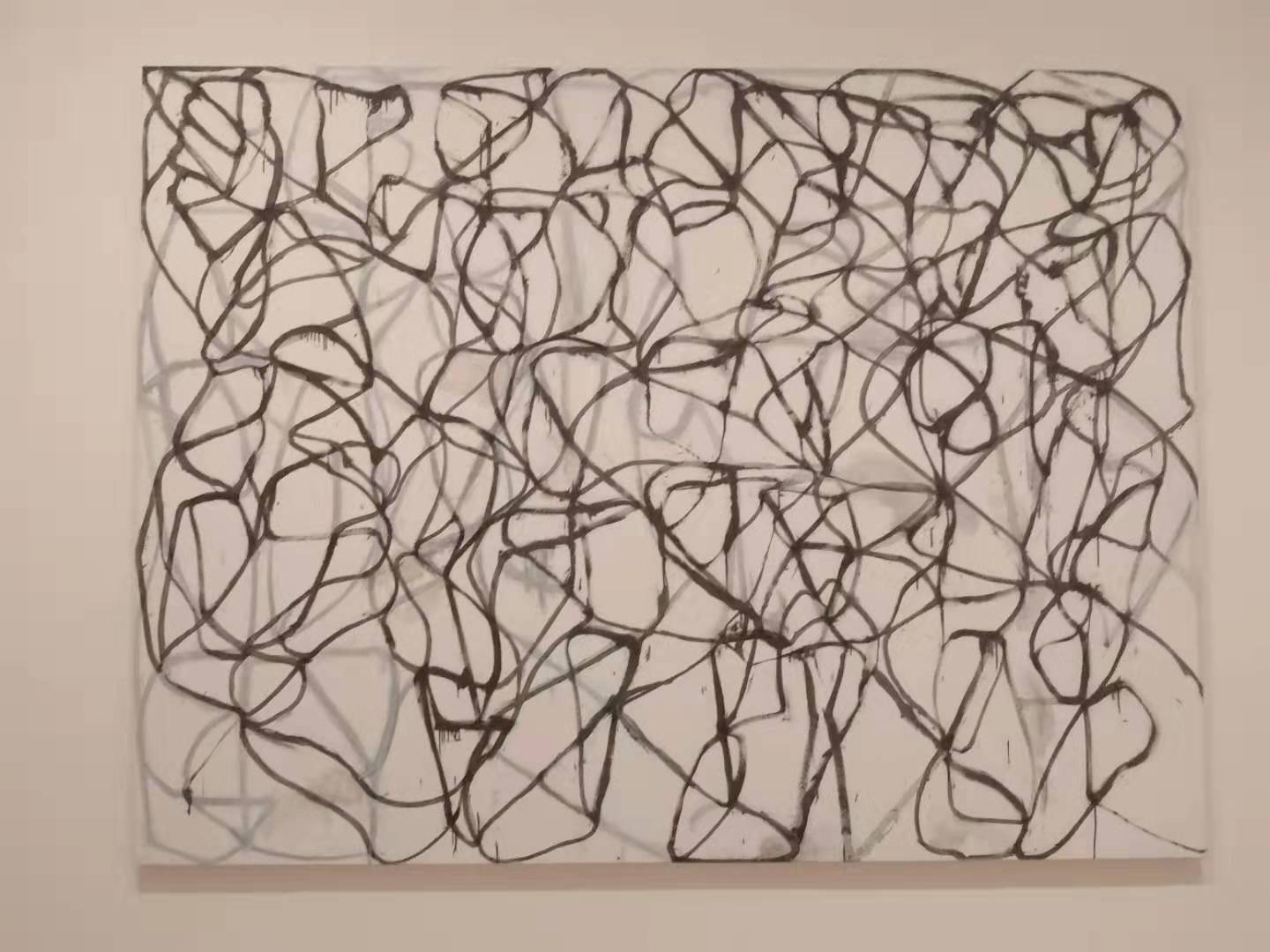
The Museum of Modern Art also has a lot of creative and imaginative works, and many of the collections have left a deep impression on me. I have two favorite collections, the first one is Marcel Duchamp’s Fountain. The first time I saw a photo of this work is in the art class of junior high school, our teacher showed us this work as a typical representative of modern art. At that time, I felt that I could not understand it. Of course, I still can’t understand it now. 😄 But the significance of this piece is probably to tell us that art is about imagining. This work is a urinal, and Duchamp only wrote the words R.MUTT and 1917 on it. Another piece of my favorite work is Brice Marden’s Cold Mountain 6(Bridge). The entire canvas is covered by cluttered and disorderly black and gray lines, these lines are not uniform in thickness, but the whole presents a strange beauty. This kind of black and gray line also reminds me of the cursive in Chinese calligraphy. And in fact, the author’s inspiration for creating this painting did come from Chinese calligraphy and the works of the Tang Dynasty poet Cold Mountain. In my opinion, the cursive script is also the most expressive writing style in Chinese calligraphy, so many calligraphers like to use cursive to express their feelings.
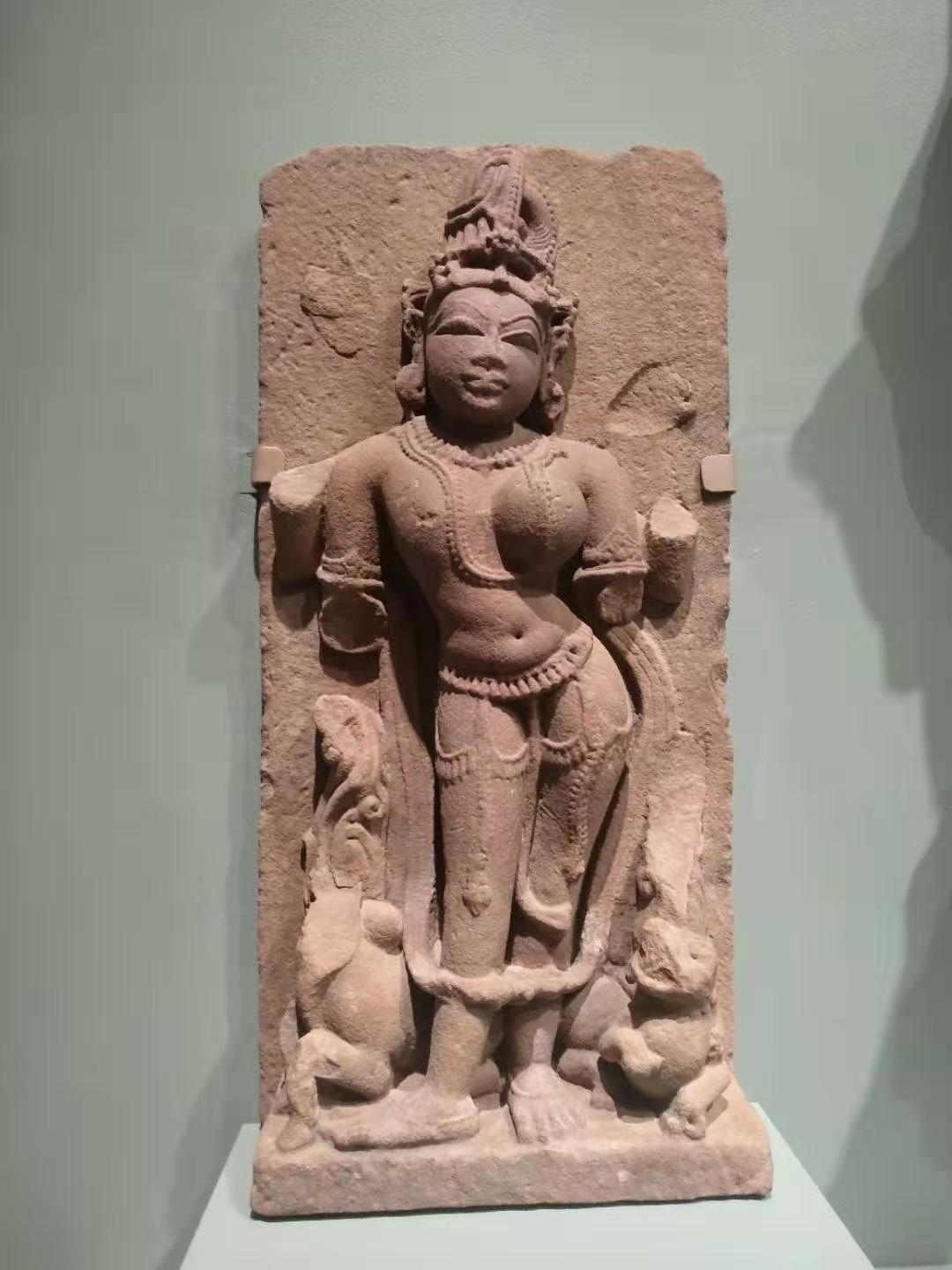
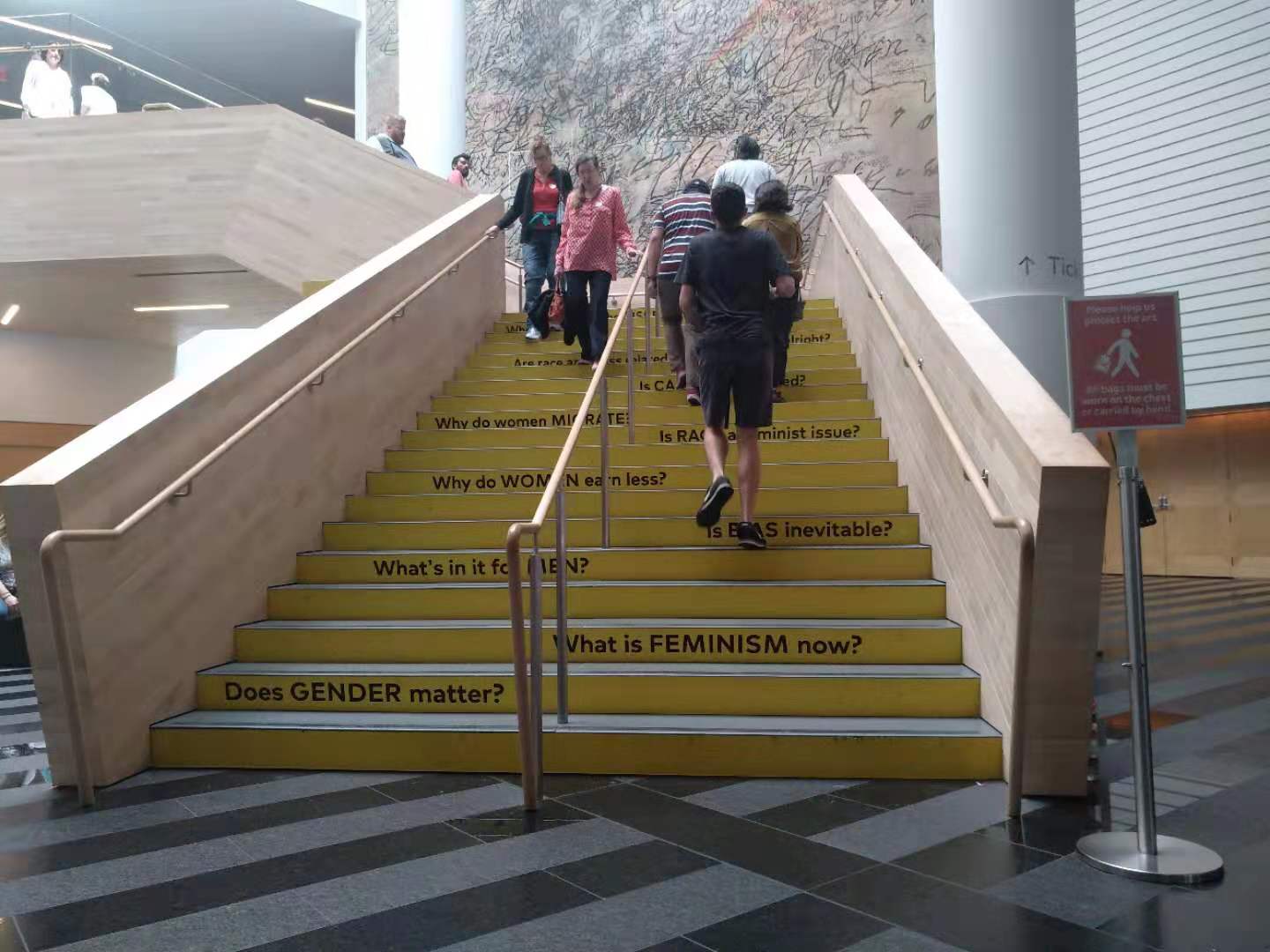
In the museums, I did see something related to what I have learned in class. For example, I saw a half-male and half-woman Indian statue, which I believe is a propaganda of a concept of gender equality. And there are also many such words on the steps of the Museum of Modern Art: ‘What is FEMINISM now?”Why do WOMAN earn less?”Is health care gendered?’······Black words on the yellow background, very eye-catching. This is also a way of promoting gender equality.
This weekend, in addition to visiting two museums, I spent a day in the Six Flags and strolled around Union Square on another day, which made me feel the culture of America more deeply. On the street of Union Square, street performers are often seen performing impromptu performances. For example, I saw a street performer performing a percussion performance with a lot of broken iron yesterday, and three children playing violin and viola ensemble. People gathered around the performers and cheered constantly. I really like the freedom, enthusiasm, and creativity of the atmosphere here, which makes me feel that life here is full of passion and joy. Compared with that, I can seldom see such performances on the streets of China. Even if there is, unlike the cheerful atmosphere here, there are often a few onlookers. Moreover, it is often felt that the performances of these performers are more for the sake of earning a living than for the love of music, so their music naturally does not have a touching power. And I have never seen the impromptu performance on the streets of China. So I hope that China can be more open in these aspects of art. After all, the place full of artistic atmosphere can often make people feel the passion of life.
China has a museum that is similar to SFMOMA, it is the Shanghai Museum of Contemporary Art. It was established on October 1, 2012, and was converted from a power plant. It is the first public contemporary art museum in mainland China and was once the “city future pavilion” during the 2010 Shanghai World Expo. The Shanghai Museum of Contemporary Art is much smaller than SFMOMA, and there are fewer exhibits on display. But in any case, this is an improvement for Chinese contemporary art.
 Abby's blog