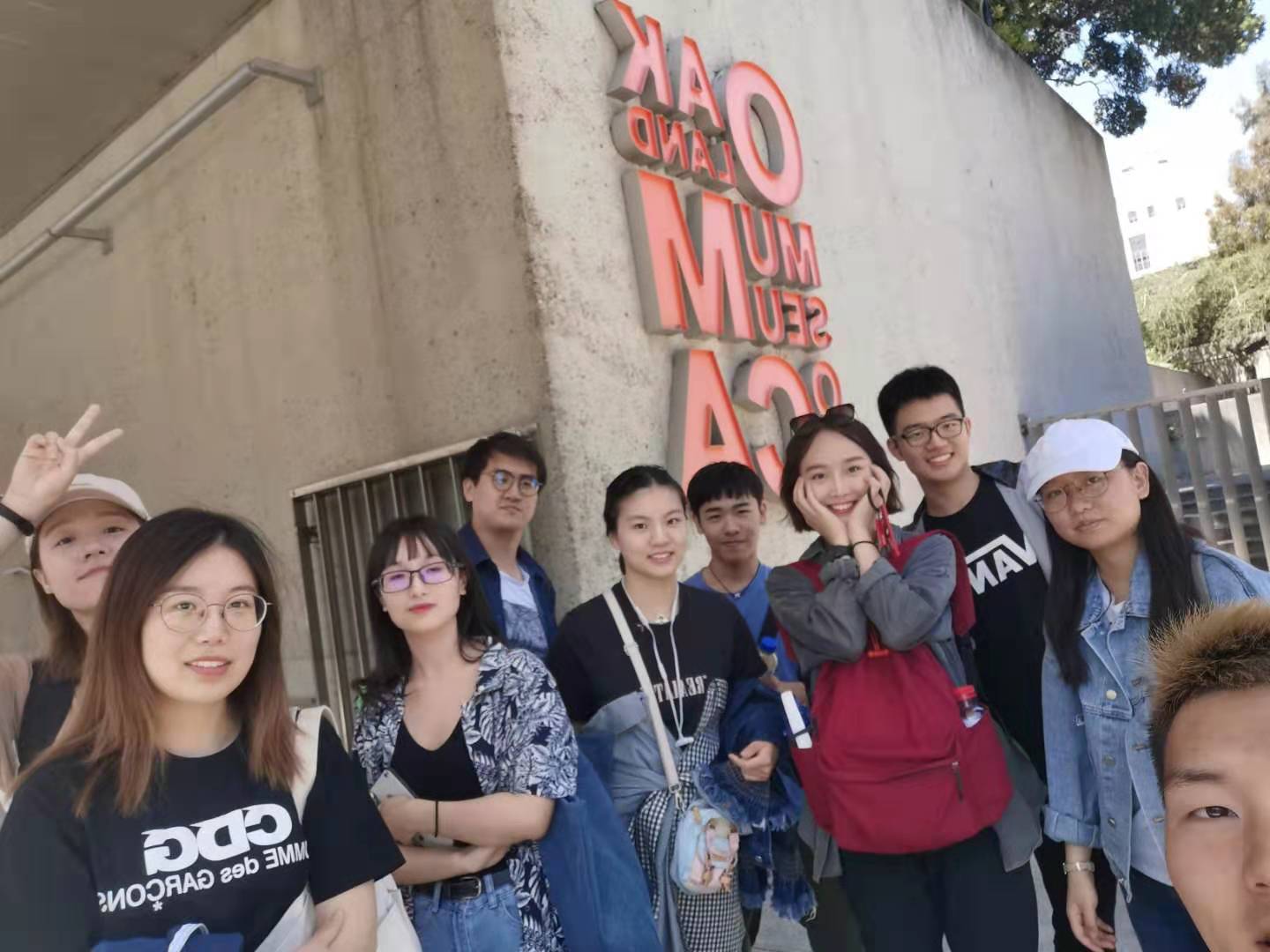
This Friday, we went to The Oakland Museum of California, and watched the exhibition Queer California: Untold Stories. There were 10 people in our team, we took the subway to Oakland and spent an unforgettable day together. Actually, many of us were more interested in visiting another museum: the GLBT Historical Society, Archives and Museum in the beginning. However, since the next week’s fieldwork location is also in the Oakland Museum of California, we finally chose to visit Queer California exhibition. Since we cannot visit the GLBT Historical Museum this time, I plan to visit this museum next time when I go to the San Francisco.
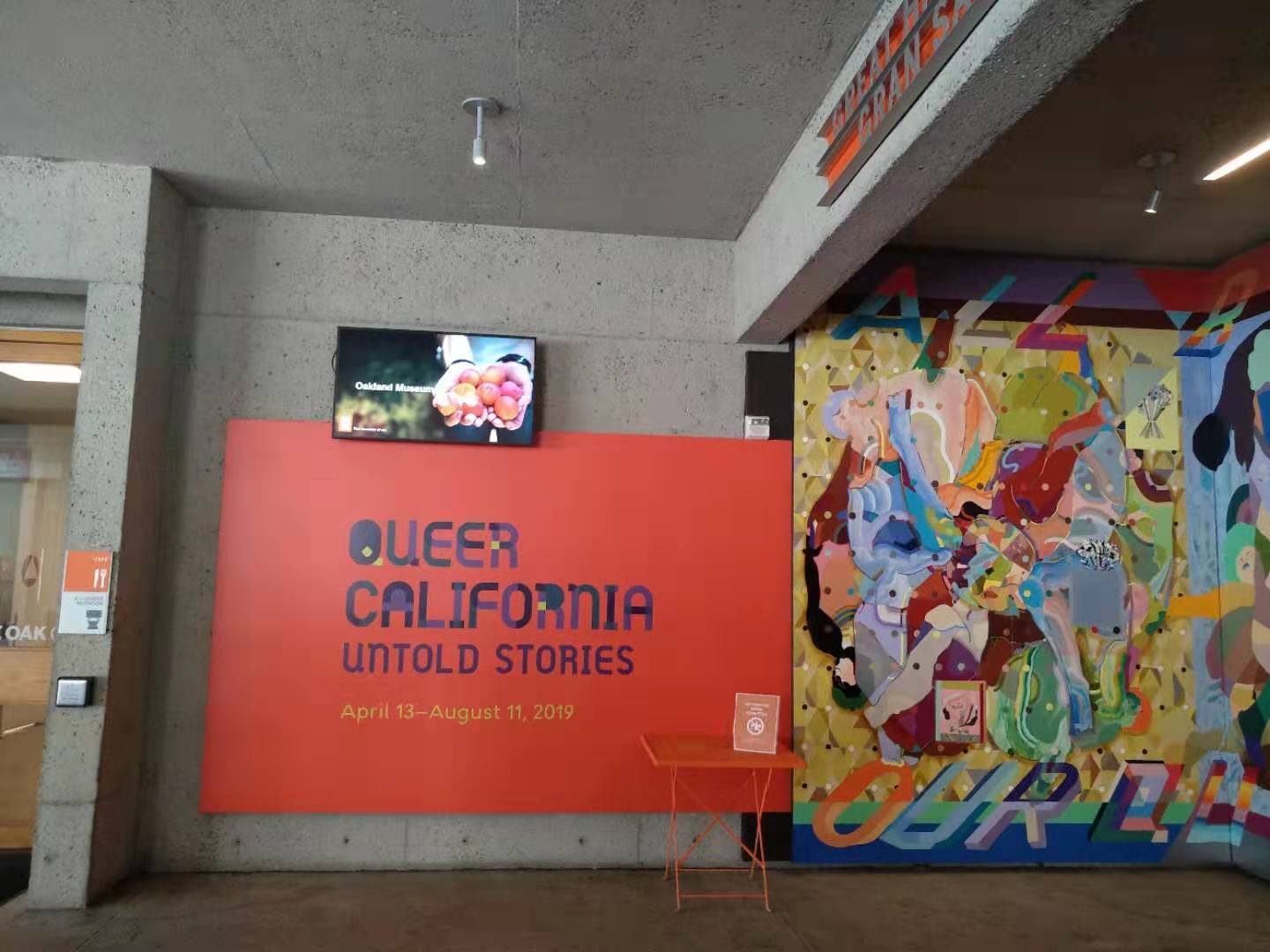
Through this visit, I have a deeper understanding of the culture and history of the LGBTQ community. The path of American gay community to fight for freedom of marriage and equal rights is very rough, and their rights protection activities can be traced back to the 1920s. At that time, although the American gay subculture had developed, under the oppression of mainstream ideology, gay people lacked identity and group consciousness. Because they were worried about being hurt and discriminated, they would rather choose to conceal their sexual orientation and hide in the ‘closet’. Late on the night of June 27, 1969, the New York police entered a bar called ‘Stone Wall’ to capture homosexuality, which led to the resistance of homosexuals and large-scale riots. The famous “Stone Wall Event” in the history of gay rights protection is regarded as the watershed of the modern gay rights movement in the United States and the world. Four years after the Stonewall Bar incident, the number of gay groups increased from 50 to 800, and by the early 1980s, the number was over a thousand. The stone wall incident finally made homosexuals no longer silent, letting them realize that they will be respected only if they fight for it. This view is applicable to any discriminated groups. In the movie milk we watched this week, the leading character Harvey mentioned such a concept: the “us’s”. The “us’s” includes the LGBTQ’s members, the Blacks, the Asians, the Seniors, the disabled and maybe more. All of us are only likely to be recognized and respected if we go to fight for our equal rights. The process of fighting for rights can never be easy, but only by doing so will it be possible to see the dawn of hope.
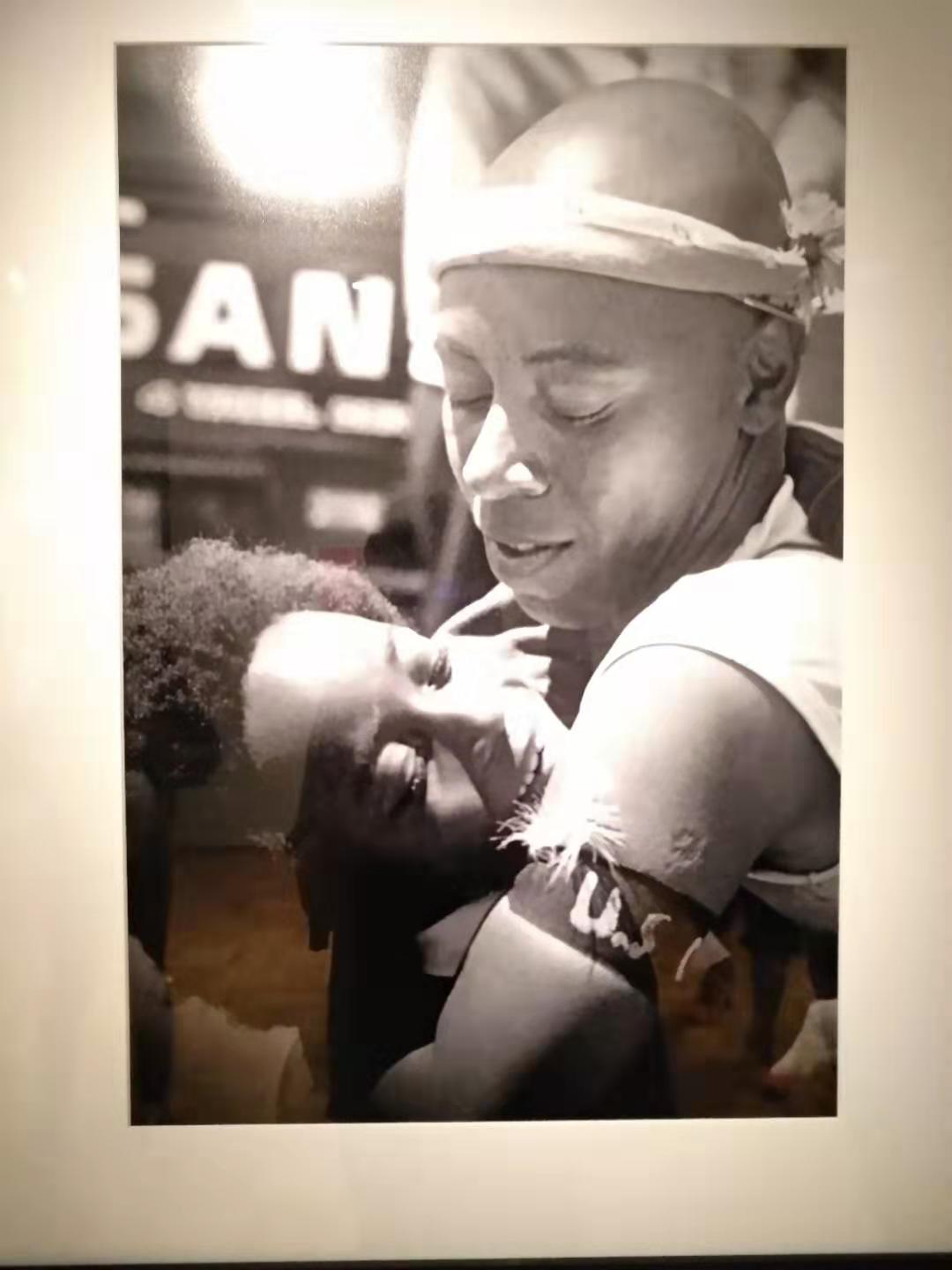
My favorite thing in this exhibit is a photo. this photo shows a black lesbian mother and her son at San Francisco Gay Pride, and it was photographed in June, 1984. From this photo, we can see the mother’s love for her child. For a long time, the image of homosexual has been heterodoxed by mainstream views, and many people even feel that homosexuality is a mental illness. But in fact, homosexuals are also mortal. They are no different from heterosexuals except that their sexual orientation are different from most people. They have no mental illness and no fault of their own. They have the same abilities as everyone else, and they are no worse than heterosexuals. I once watched a TV series: Queer as folk. After that, I also watched many gay films and television works, like Brokeback Mountain, Call Me By Your Name. As I grow older, I am more and more able to understand the implications of these works. Love can not only transcend gender, but can also transcend time and space. If we can love, then love more and be more tolerant.
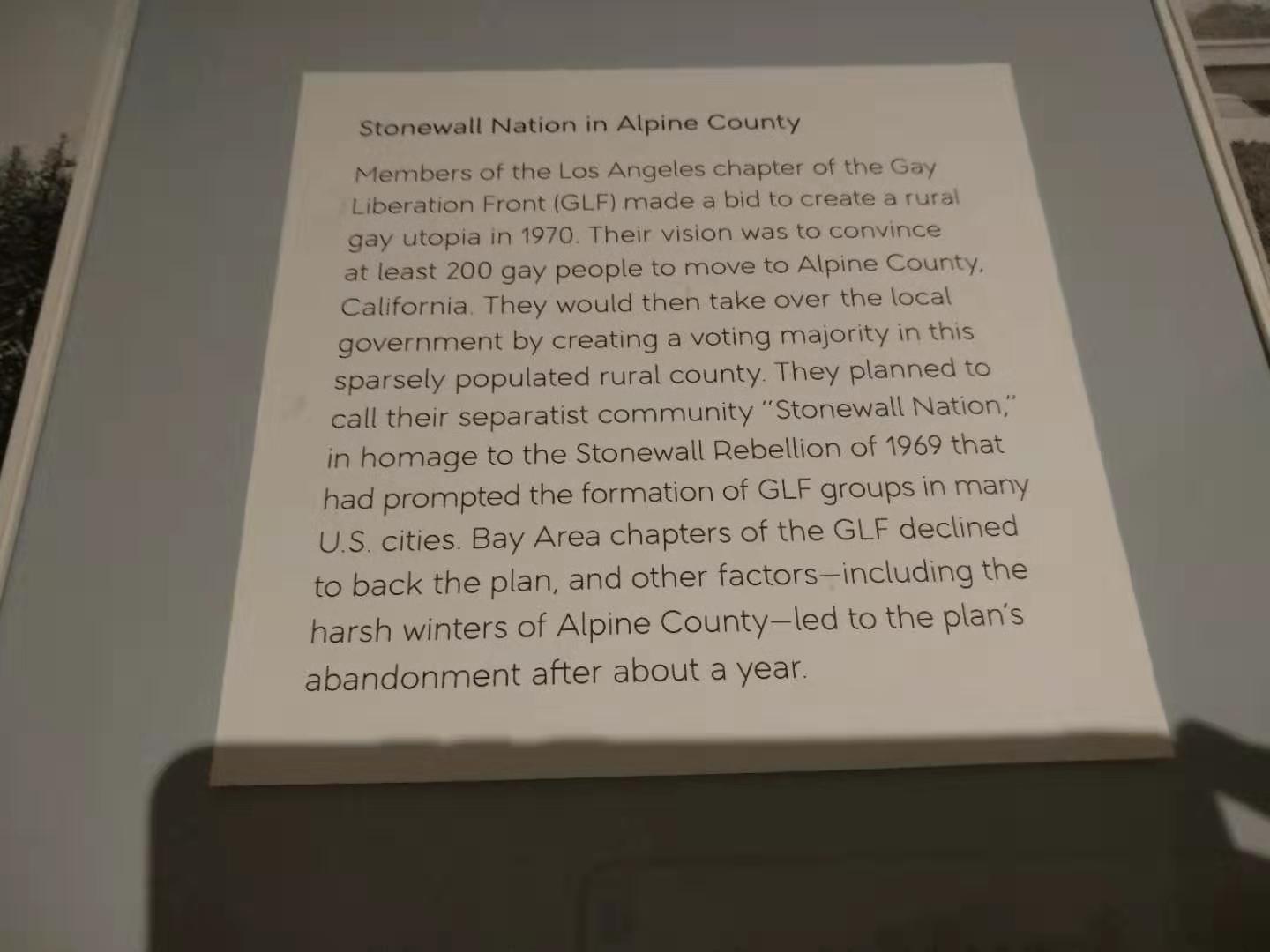
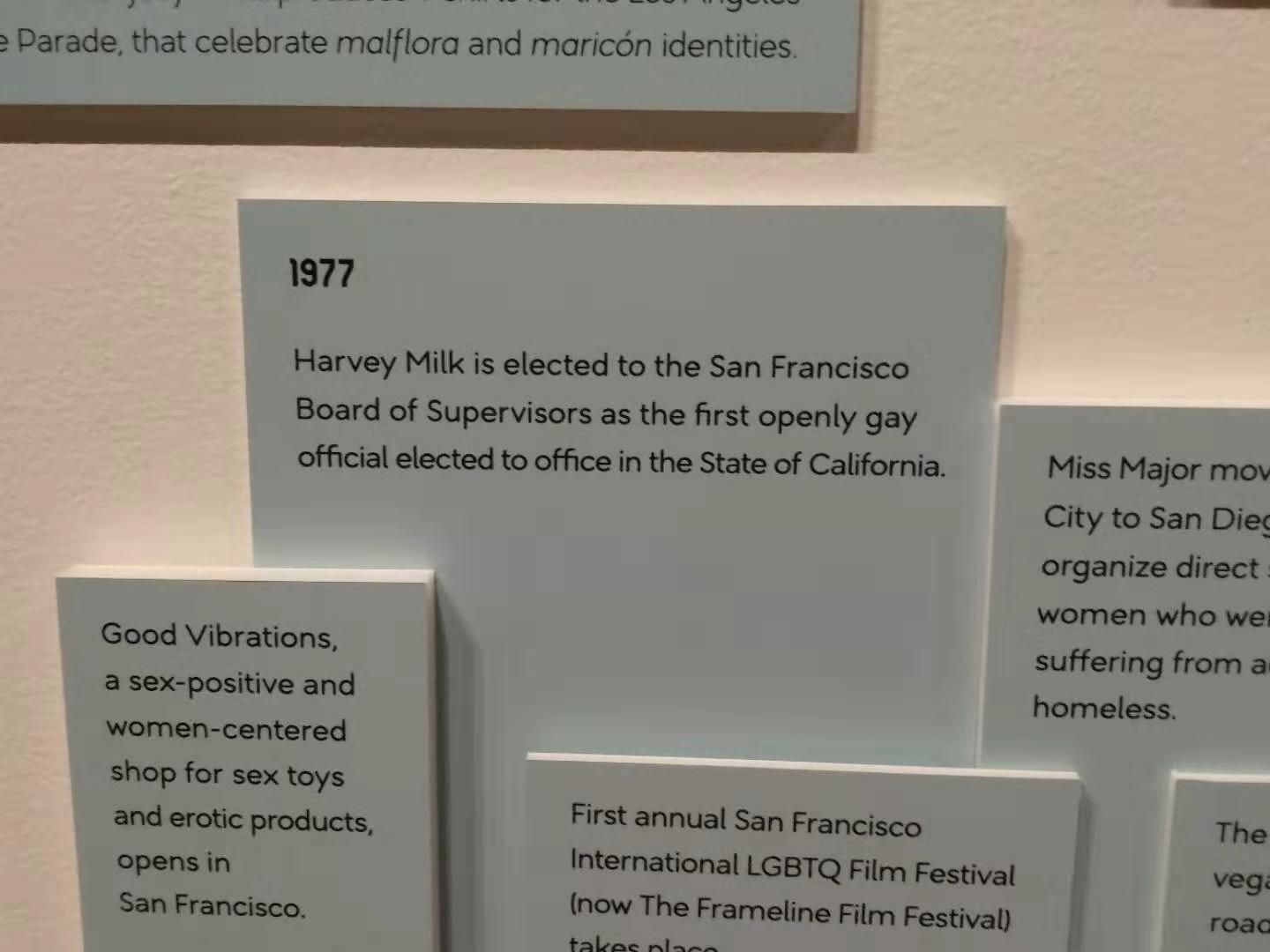
In this exhibition, I also noticed two paragraphs of text relate to what I have learned in the readings and films. The first one is about Harvey Milk, it said that Harvey Milk is elected to the San Francisco Board of Supervisors as the first openly gay official elected to office in the State of California. The second one is about the ‘Stone Wall Event’, and it said that members of the Los Angeles chapter of the Gay Liberation Front(GLF) planned to call their separatist community “Stonewall Nation,” in homage to the Stonewall Rebellion of 1969.
When talked about whether my native country has a similar place to this exhibition, I was surprised to find that there was no such a place. This made me think about the current situation of homosexuality in China today. In 1997, homosexual acts were decriminalized in China, six years before the United States. In 2001, homosexuality was removed from the classification criteria for mental disorders, which was a considerable improvement. Now on social media, gay or gay organizations can speak on it. There is no limit to the freedom of homosexuality on the Internet, but there is still a long way to go before legislation can protect LGBTQ’s members. Nowadays, the biggest source of pressure for homosexuals in China is their family. Many homosexuals choose not to come out to avoid the incomprehension and disappointment of their family and friends. This is also the reason why the phenomenon of “‘Gay Wife’ in China is serious today. However, I believe that with the openness in people’s minds and the continuous development of queer struggle, these problems will eventually be solved. And there will also be more and more queer activity memorials and queer history exhibitions in China, and even in the whole world.
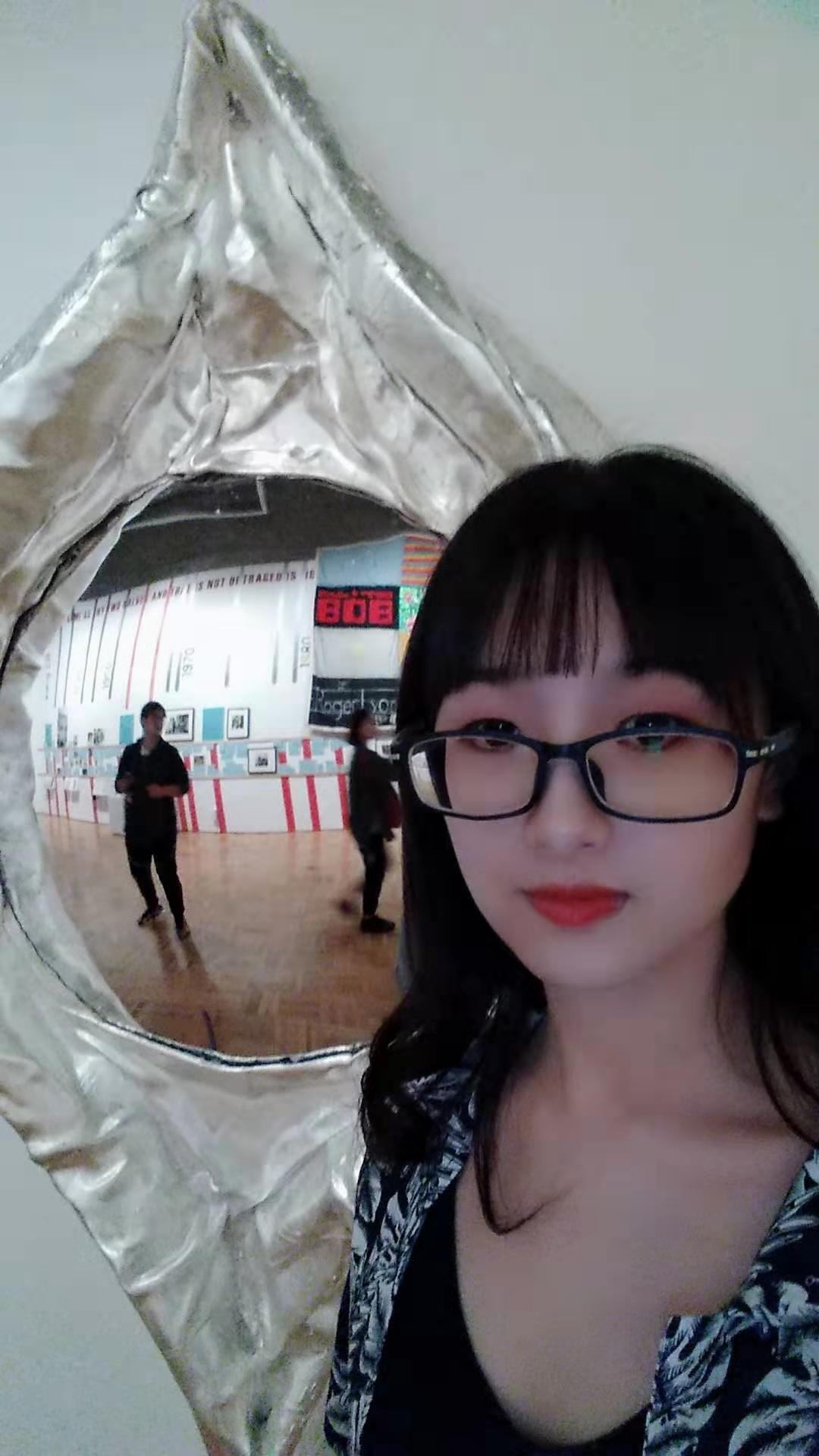
Finally, what I want to say is that what I learned this week made me gain a lot. LGBTQ is something I was interested in, and through this week’s study, I learned more about the history and culture of this group. Moreover, the fight for equality and freedom for all mankind should not be the task of only minorities. It should be a responsibility that everyone agrees and works for.
 Abby's blog